Kebijakan Sewa Tanah (Landrente) pada Masa Pemerintahan Raffles (1811-1816)

Authors

  • Alfredo Xaverius Aisoki Universitas Cenderawasih

Keywords:

Landrente System, Thomas Stamford Raffles, British Administration, Java, Agrarian Policy

Abstract

This historical study examines the implementation of the land rent system (landrente) during the administration of Lieutenant Governor Thomas Stamford Raffles in Java from 1811 to 1816. Utilizing the historical research method—comprising heuristics, source criticism, interpretation, and historiography—this paper analyzes how British liberal principles and experiences from India influenced colonial agricultural and fiscal policies. Raffles sought to abolish traditional forced labor and compulsory crop deliveries, replacing them with a rationalized system where the government acted as the primary landowner and peasants paid a direct land tax based on productivity. However, the policy faced significant obstacles, including limited state finances, a shortage of experienced European administrators, an economy still heavily reliant on subsistence agriculture rather than cash transactions, and a short administration tenure. Ultimately, the land rent system failed to operate smoothly under these conditions, yet it laid a foundational administrative framework for colonial agrarian taxation and structural governance that influenced subsequent policies in the Dutch East Indies.

Downloads

Download data is not yet available.

Author Biography

Alfredo Xaverius Aisoki, Universitas Cenderawasih

This historical study examines the implementation of the land rent system (landrente) during the administration of Lieutenant Governor Thomas Stamford Raffles in Java from 1811 to 1816. Utilizing the historical research method—comprising heuristics, source criticism, interpretation, and historiography—this paper analyzes how British liberal principles and experiences from India influenced colonial agricultural and fiscal policies. Raffles sought to abolish traditional forced labor and compulsory crop deliveries, replacing them with a rationalized system where the government acted as the primary landowner and peasants paid a direct land tax based on productivity. However, the policy faced significant obstacles, including limited state finances, a shortage of experienced European administrators, an economy still heavily reliant on subsistence agriculture rather than cash transactions, and a short administration tenure. Ultimately, the land rent system failed to operate smoothly under these conditions, yet it laid a foundational administrative framework for colonial agrarian taxation and structural governance that influenced subsequent policies in the Dutch East Indies.

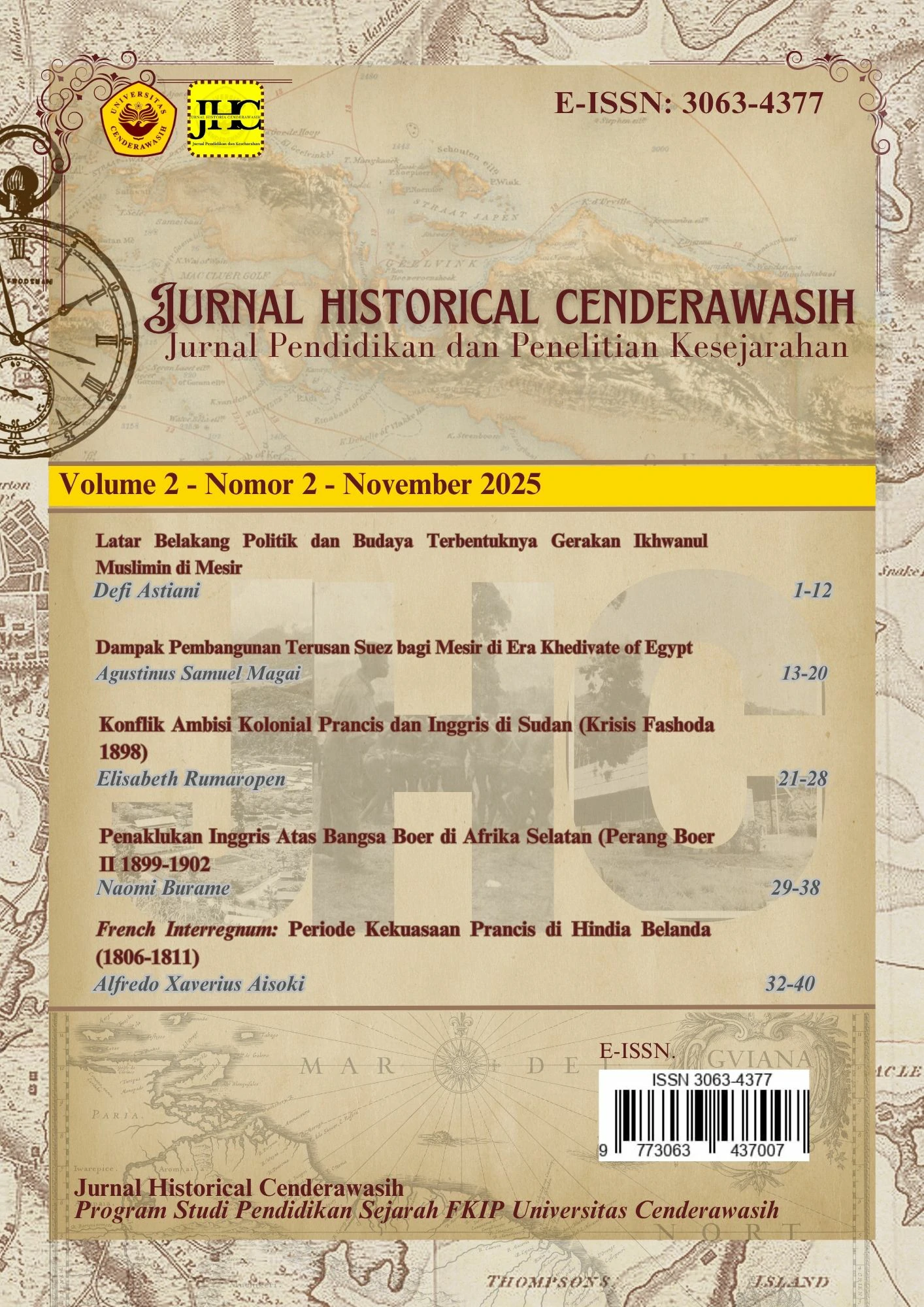
Jurnal Historical Cenderawasih vol.1 no.2

Downloads

Published

2025-12-20

Issue

Section

Research Articles