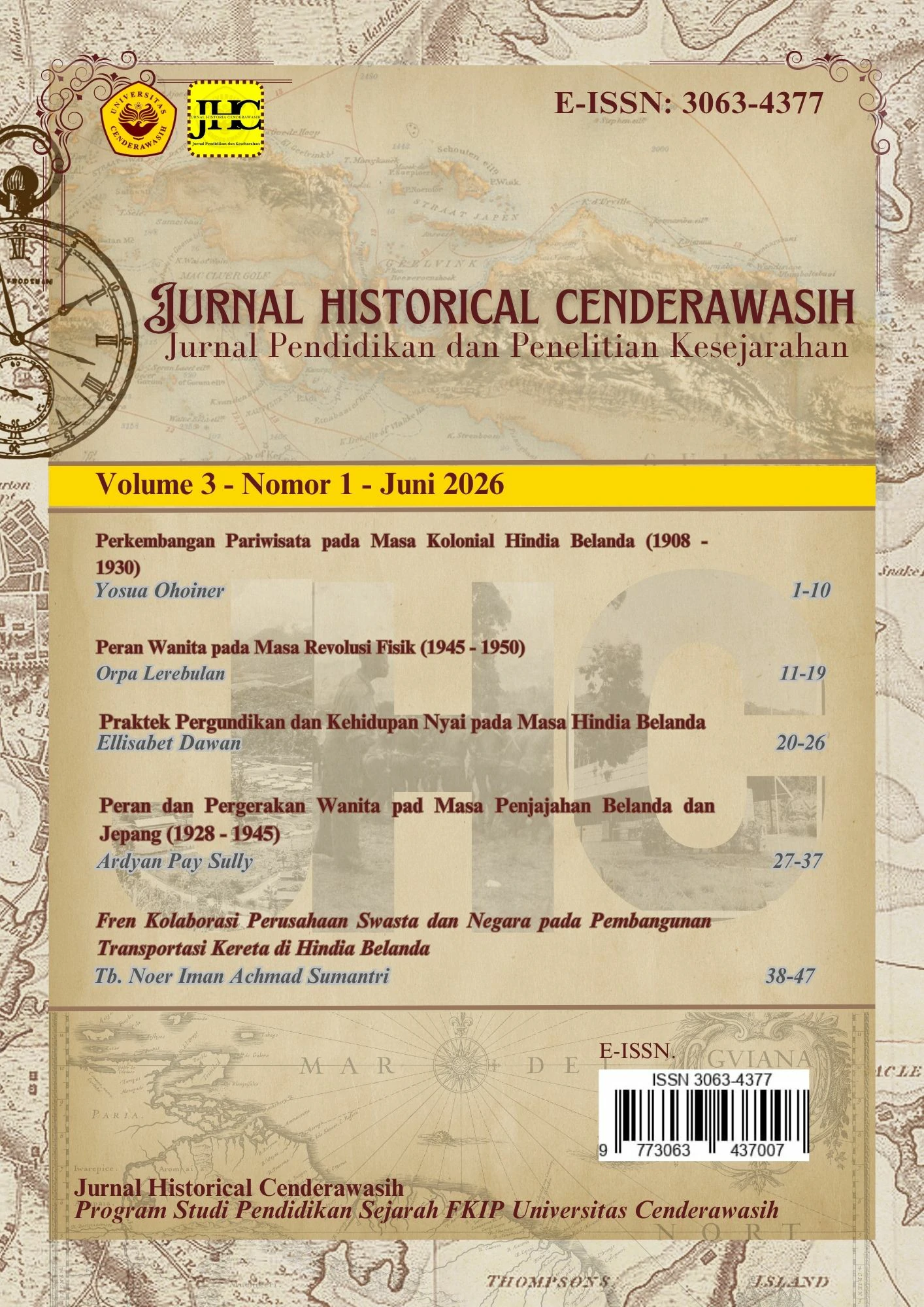
Peran Wanita Pada Masa Revolusi Fisik (1945-1950)
Kata Kunci:
Women's Role, Physical Revolution, PERWARI, National Independence, Woman's OrganizationAbstrak
This historical study examines the roles and contributions of Indonesian women during the physical revolution period from 1945 to 1950. Utilizing the historical research method—encompassing heuristics, source criticism, interpretation, and historiography—this paper analyzes how women actively participated in defending national independence amidst male-dominated military and political movements. Despite physical limitations in direct combat, women organized themselves into prominent associations such as the Wanita Negara Indonesia (WANI), Laskar Wanita Indonesia (LASWI), and Persatuan Wanita Republik Indonesia (Perwari). These organizations played vital roles at the rear and front lines by establishing public kitchens, managing Red Cross stations, acting as intelligence couriers, providing logistics, and fighting for women's social and legal emancipation. Furthermore, organizations such as the Congress of Indonesian Women (KOWANI) and later leftist movements like Gerwani expanded women's involvement into broader socio-political spheres. Ultimately, the active mobilization of women during the revolution not only contributed significantly to preserving national sovereignty but also laid the foundational framework for women's movements in post-independence Indonesia.
Unduhan
Unduhan
Diterbitkan
Terbitan
Bagian
Lisensi
Authors who publish with Jurnal Historical Cenderawasih retain the copyright of their work.
Authors grant the journal the right of first publication of the article.
All articles published in this journal are licensed under:
Creative Commons Attribution-Non Commercial 4.0 International License (CC BY-NC 4.0).
This license allows others to:
- copy
- distribute
- display
- adapt the work
For non-commercial purposes, provided that proper credit is given to the original author and source.


