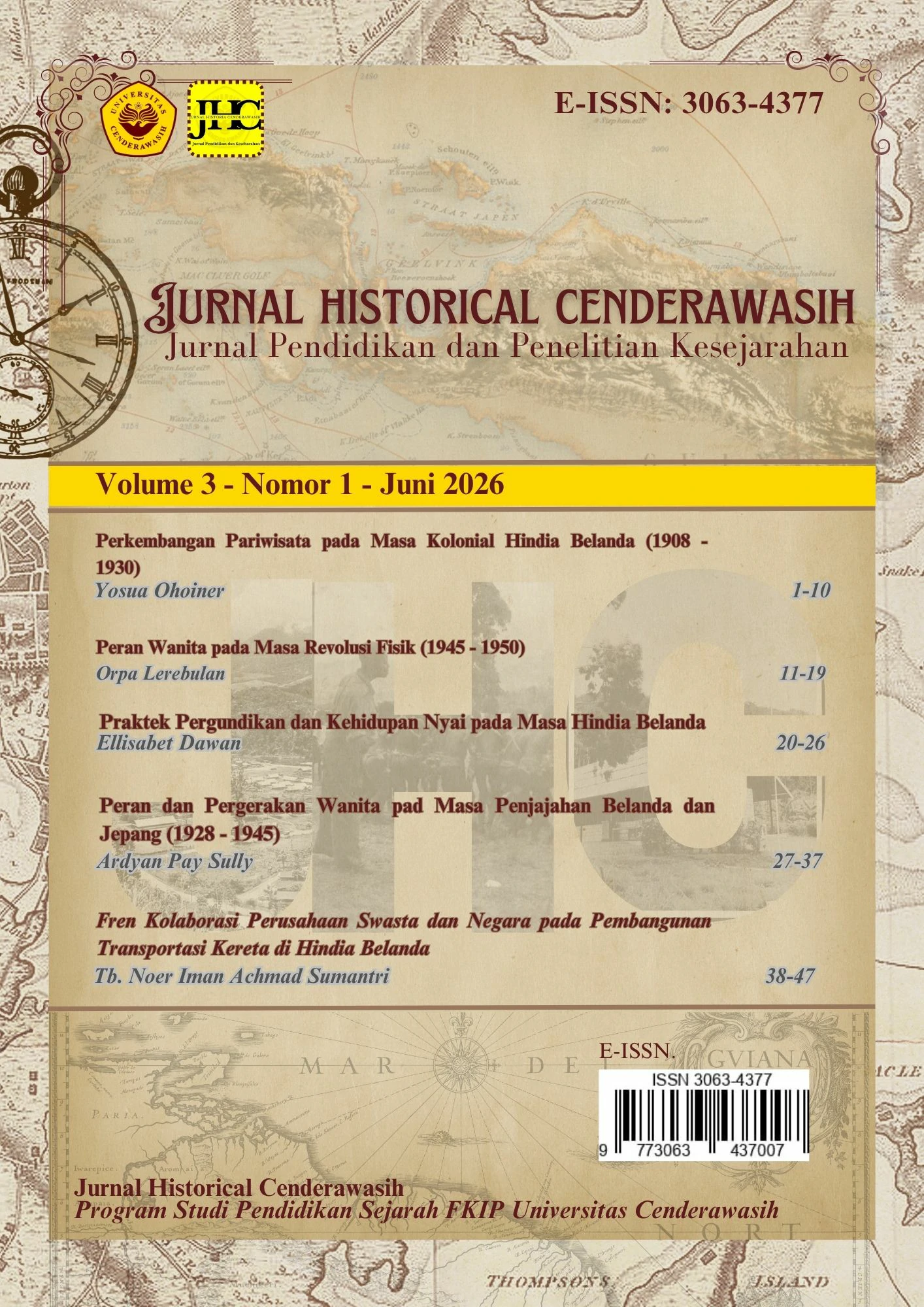
Praktek Pergundikan dan Kehidupan Nyai pada Masa Hindia Belanda
Kata Kunci:
Concubinage, Nyai, Dutch East Indies, Colonial Economy, Social HistoryAbstrak
This historical study examines the practice of concubinage (pergundikan) in the Dutch East Indies, driven by liberal economic policies, modernization, and social transitions during the colonial era. Utilizing the historical research method—encompassing heuristics, source criticism, interpretation, and historiography—this paper explores how economic pressures, poverty, and the influx of unmarried European officials, plantation workers, and military personnel normalized concubinage and prostitution. The phenomenon led to the rise of nyai (unofficial native concubines) who lived under varying legal and social conditions, ranging from legally recognized unions to exploitative relationships within military barracks (tangsi) and plantation estates. These practices profoundly impacted women's psychological, physical, and social well-being. Ultimately, the economic crises of the 1930s and the subsequent Japanese occupation altered these dynamics, shifting the nature of exploitation into forced labor and systems such as jugun ianfu, while leaving a complex legacy regarding women's status during the colonial period.
Unduhan
Unduhan
Diterbitkan
Terbitan
Bagian
Lisensi
Authors who publish with Jurnal Historical Cenderawasih retain the copyright of their work.
Authors grant the journal the right of first publication of the article.
All articles published in this journal are licensed under:
Creative Commons Attribution-Non Commercial 4.0 International License (CC BY-NC 4.0).
This license allows others to:
- copy
- distribute
- display
- adapt the work
For non-commercial purposes, provided that proper credit is given to the original author and source.


